
A diamond is more
than four grades.
Understanding what the numbers and letters actually mean.
Four characteristics.
One diamond.
The 4Cs give us a shared language for understanding a diamond. They describe its weight, the way it interacts with light, the presence of natural characteristics, and the amount of color it carries.
Each tells us something important. None tells the whole story on its own.
Carat is weight.
Not necessarily size.
A carat tells us how much a diamond weighs. One carat equals 0.20 grams. It does not, by itself, tell us exactly how large that diamond will appear when viewed from above.
Two diamonds can have the same carat weight and look different in size.
The visible spread of a diamond depends on its proportions, shape, and how its weight is distributed between the crown, girdle, and pavilion.
A deeper stone may carry more of its weight below the surface, while another diamond of the same weight may present a larger face-up appearance.

In finished jewelry, carat weight is only one part of the picture. Proportion, consistency, setting, and the way multiple stones work together can matter just as much as the number on paper.
Cut is about proportions.
And how they work together.
A diamond's cut considers the relationship between its proportions, symmetry, polish, and the way these elements influence its appearance. No single measurement tells the whole story.
Light reveals the quality of the cut.
The proportions of the table, crown, girdle, pavilion, and other facets influence how light travels through and returns from a diamond.
Brightness, fire, and scintillation contribute to its face-up appearance, while polish, symmetry, durability, and weight distribution are also part of cut quality.
Brightness
The return of white light to the observer.
Fire
The dispersion of white light into spectral colors.
Scintillation
Flashes of light and contrasting dark areas seen as the diamond, observer, or light source moves.

Cut and shape are not the same thing.
Shape describes a diamond's outline round, oval, pear, marquise, emerald, and others. Cut quality considers how proportions and craftsmanship influence the diamond's appearance.
GIA's standard cut grade is assigned to standard round brilliant diamonds in the D-to-Z color range.
A grade gives you valuable information, but it does not replace looking at the diamond. Diamonds within the same cut-grade range can still have different and equally appealing appearances.
Color is about
what the eye doesn't see.
In the D-to-Z grading system, diamond color is evaluated by the relative absence of color. The scale begins at D, representing colorless, and progresses toward increasing traces of yellow, brown, or gray through Z.
The differences between neighboring grades can be very subtle.
Diamonds are color graded under controlled lighting and viewing conditions by comparing them with master stones of established color grades.
Once a diamond becomes part of a piece of jewelry, its appearance can also be influenced by its size, shape, setting, and the color of the surrounding metal.

More color can become a different category entirely.
The D-to-Z scale describes diamonds within the normal color range. Diamonds with color outside this range are evaluated differently as colored diamonds, where the presence and strength of color become part of the assessment.
A higher color grade is not automatically the right choice for every piece. What matters is how the diamond works within the design, alongside the metal, and with the other stones around it.
Clarity looks closer.
Much closer.
Diamonds can contain internal characteristics called inclusions and surface characteristics called blemishes. Clarity describes their relative presence and how noticeable they are when the diamond is examined under magnification.
A microscopic difference is not always a visible difference.
Clarity grading is performed at 10× magnification. Graders consider the size, number, position, nature, and relief of a diamond's clarity characteristics.
Many inclusions that affect a clarity grade may be difficult or impossible to see with the unaided eye during normal wear. Their visibility depends on the individual diamond.

Size
Number
Position
Nature
Relief
Higher clarity means greater rarity, but it does not automatically mean a more beautiful piece of jewelry. What matters is whether the characteristics are noticeable, how they affect the diamond, and how the stone performs within the finished design.
When diamonds
become jewelry.
The 4Cs help describe a diamond. But finished jewelry asks a few more questions. Here are some of the things we believe are worth knowing when choosing a piece.
For an important individual diamond, documentation matters.
When buying a significant center stone, particularly for an engagement ring, we recommend an independent grading report from a respected gemological laboratory. It provides an objective assessment of the diamond and helps you understand exactly what you are buying.
Consistency is part of the quality.
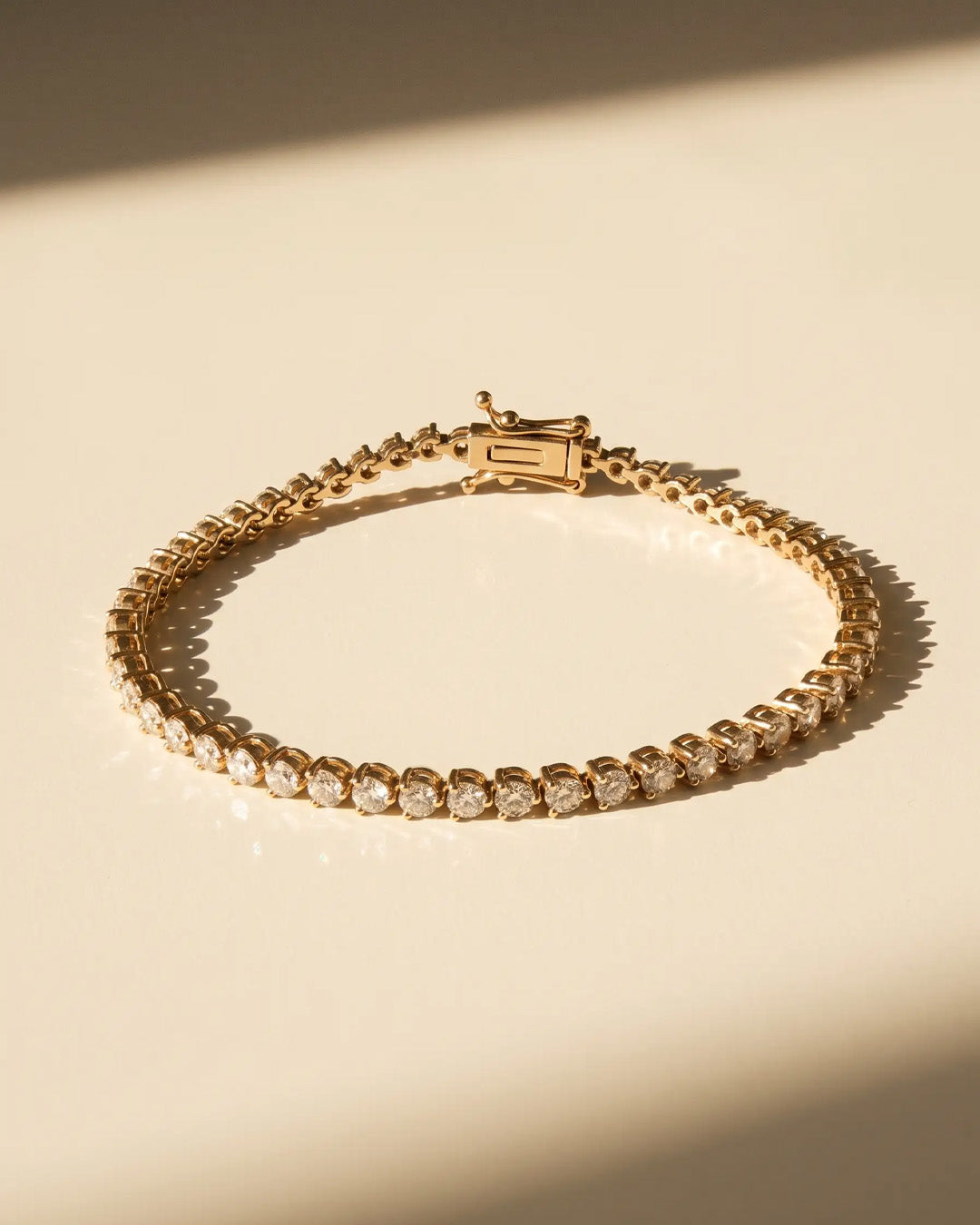
A tennis bracelet or necklace is not simply a collection of individually good diamonds. The stones should work together. Look for consistency in size, color, and overall appearance so that no individual stone visually interrupts the line.
For multi-stone jewelry, a well-matched, tight color range can matter more than focusing on a single letter grade.
Small doesn't mean insignificant.
Pavé jewelry may contain dozens or even hundreds of very small diamonds. Their individual weights may be tiny, but selecting and matching them is still part of the craftsmanship.
Consistency in size, color, and appearance allows many small stones to read as one continuous field of light. The smaller the stones, the more important careful sorting and matching become to the finished result.
Know what the number describes.
Carat weight can describe a single diamond. Total carat weight describes the combined weight of multiple diamonds in a piece. A one-carat center stone and one total carat distributed across many diamonds are very different things.
When comparing jewelry, check whether the stated weight refers to one diamond or to all of the diamonds combined.
A diamond is not viewed in isolation once it becomes jewelry.
Metal color, setting style, neighboring stones, and the proportions of the design can all influence how a diamond presents once it is worn.
This is why the finished piece matters. A laboratory grade tells you something important about the diamond, but it cannot tell you everything about how the jewelry will look.
For us, origin is part of value.
Natural and laboratory-grown diamonds can share essentially the same chemical, physical, and optical properties. What separates them is their origin.
At QIZZ, we choose natural diamonds. We value their geological rarity, their natural formation, and the human expertise involved in responsibly sourcing, selecting, cutting, and setting them.
We also believe that responsible sourcing should not be assumed simply from whether a diamond comes from a mine or a laboratory. Transparency and accountability throughout the supply chain matter.
Grades help us understand diamonds.
Jewelry asks us to look at the whole piece.
Want to know more
about a piece?
Whether you'd like to know more about a diamond, its grading, the stones in a particular QIZZ piece, or simply want some guidance, we're always happy to help.
ASK QIZZ →